
Cyanapse Vision Lab
Cyanapse Vision Lab pioneers the science of visual enhancement at the frontier of AI. We build tools and technology that augment visual perception to restore what is missing and reveal what normally lies beyond conscious awareness.
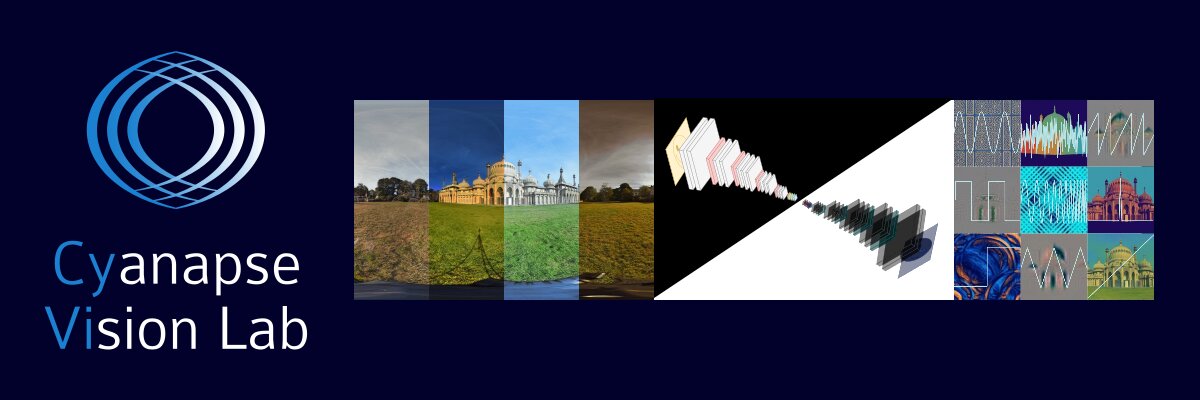
Cyanapse Vision Lab is the engine behind a decade of original research into how the human brain perceives, processes and is guided by visual information. From spectral colour augmentation to exact neural network inversion, our work bridges computational neuroscience, colour science, cutting-edge AI, advanced computer vision and deep learning techniques to produce technology that sees the world differently.
Research at the Frontier of Perception
Vision is not a direct recording of reality as the brain continuously filters and reconstructs what we see. Most visual information never reaches conscious awareness, and the filtering process differs from person to person. In most cases, the filtering mechanisms can be guided in measurable ways to improve perception and experience. By determining how we drive this process and measuring the outcomes, we can also understand the unique visual experience of each person.
Since 2016, Cyanapse Vision Lab has pursued this exact ambition. We have been developing technology that measurably augments human perception. We build tools to better understand and improve how people perceive visual scenes, navigate complex visual environments, and interact with digital content where conventional image processing reaches its limits. Our research is grounded in computational neuroscience, colour science, and frontier AI tech in computer vision and deep learning, addressing fundamental scientific questions by investigating how the visual cortex integrates, transforms, and prioritises perceptual signals.
Our research focuses on perception itself. We develop deterministic, perceptually grounded and explainable algorithms that model how the human brain processes visual information. Unlike consumer AI tools that generate novel imagery from statistical patterns, our approach based on in-house frontier technologies such as Exact Inversion, Active Colour Enhancement, Spectral Augmentation, Automated Photorealistic Image Editing and Perceptual Quality Assessment Metrics ensure precise and reliable manipulation of semantic features that are free of hallucinations while carrying the unique capability of driving and enhancing visual integration deterministically.
Visual Stimulation Platform
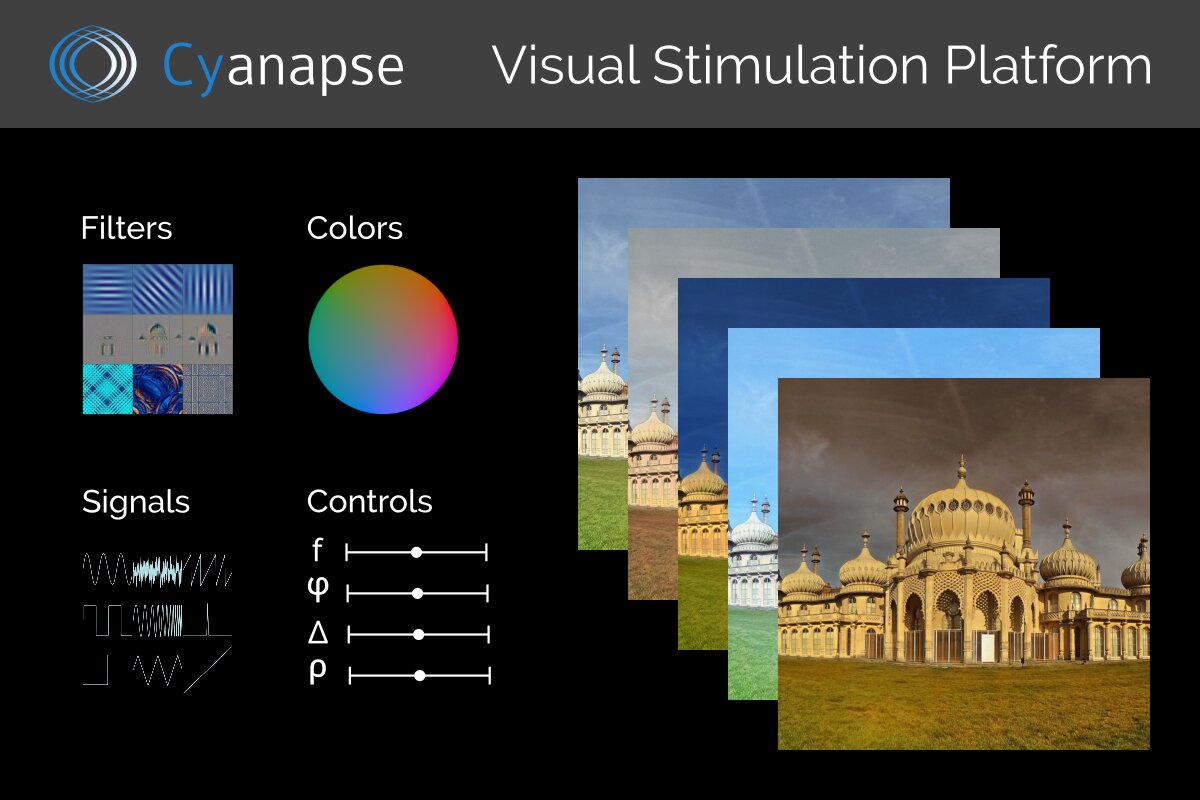
The perceptual manipulation capabilities developed in Cyanapse Vision Lab extend beyond image enhancement. Our algorithms provide the underlying substrate for a system capable of creating percepts of motion, colour and other perceptual features that would not ordinarily reach conscious awareness. We are developing a Visual Stimulation Platform to enable users and scientists alike design perceptual experiments that participants can use at home or in everyday settings through an adaptive, context-aware interface. By collecting responses across diverse environments and allowing participants to explore and share personalised perceptual settings, the platform supports large-scale studies of human vision. The potential applications are extraordinary in scope and include therapeutic and rehabilitative visual protocols, visual training for cognitive enhancement, creative and immersive visual art installations, safety and security such as non-distracting visual stimuli to maintain alertness, digital accessibility for online content, and more.
Facilitation of Visual Integration
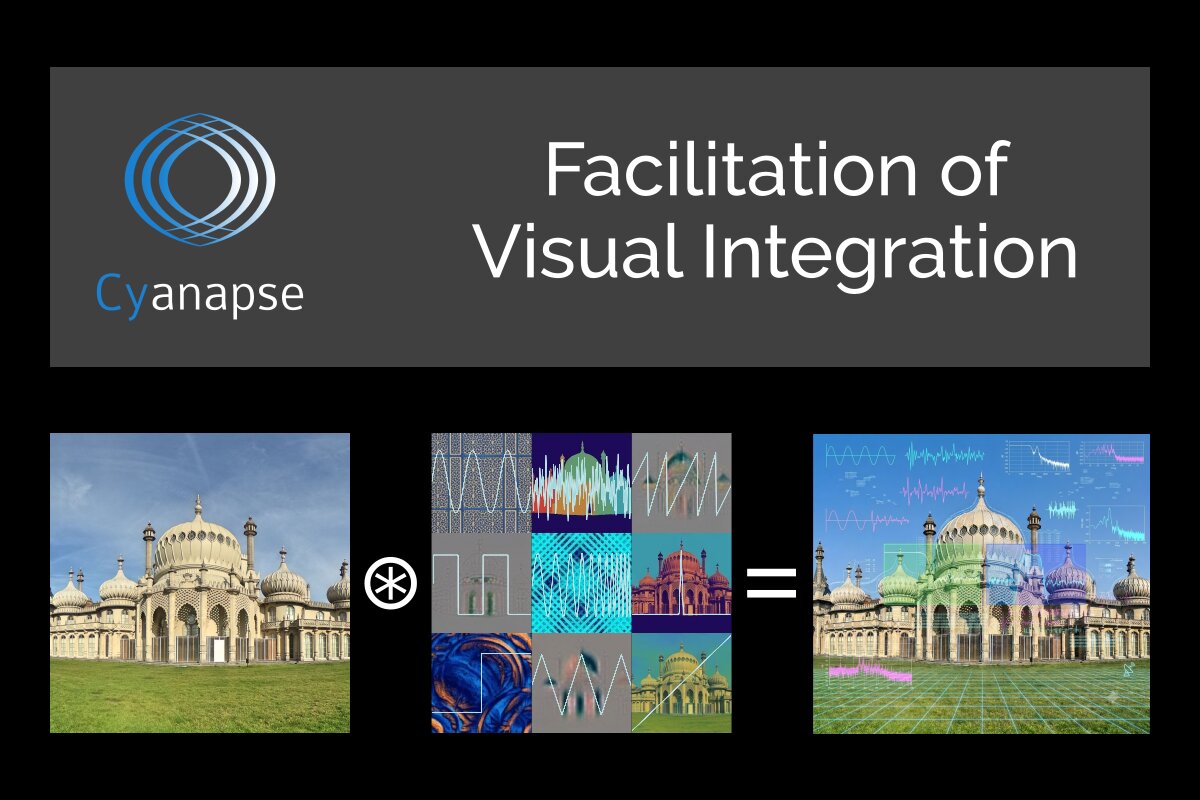
Human perception is remarkably sensitive to weak signals that often remain below the threshold of conscious awareness. We have been investigating how precisely calibrated image transformations can strengthen these latent signals and improve visual integration. Our novel facilitation pipeline unifies conscious percepts through mechanisms that are exquisitely sensitive to sub-threshold fluctuations. The technology enabling this is rooted in stochastic facilitation, and leverages spectral enhancements distributed in the scene through exact inversion. Image features are decomposed through the forward pass of our invertible network into semantically and perceptually meaningful representations, enhanced with precisely calibrated spectral augmentations, and recomposed into the original scene coordinate space via exact inversion, losslessly, and without artefact. The result is a stochastic facilitation effect at the point of perception, where sub-threshold signals detected by the visual cortex are delivered with the spatial coherence and semantic fidelity that only exact inversion makes possible. Visual integration is boosted and the scene is perceived more fully.
Active Colour Enhancement (ACE)
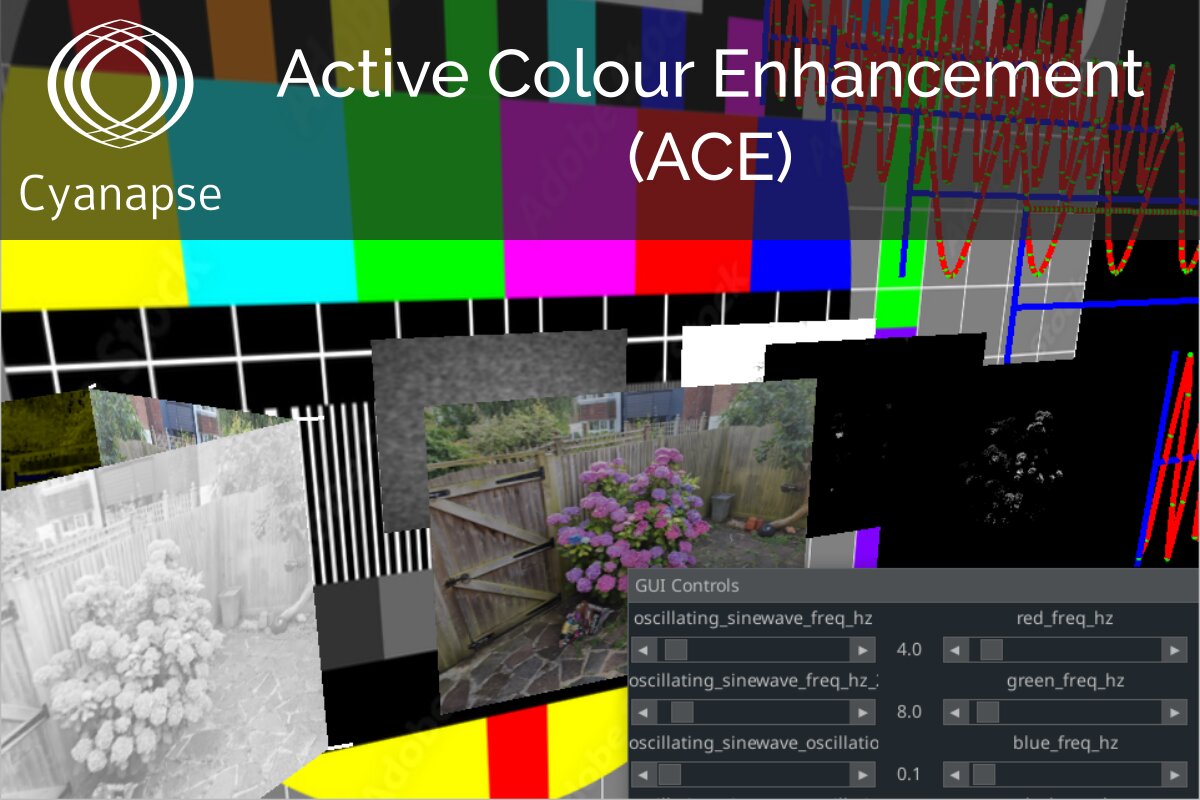
ACE is our proprietary technique for widening or restoring human colour response through image-embedded spectral cues. The augmentation and compensation of colour perception is based on precisely targeted spectral enhancements in perceptually accurate colour spaces that closely model the sensitivity curves of the human visual system. By timing-matching fluctuations to the spectral sensitivity of the visual system, differential cueing to targeted colour groups are applied, and enhanced and suppressed feature channels are integrated at sub-threshold levels, meaning the enhancement is felt before it is consciously seen, working in harmony with the attentional mechanisms of the brain. The approach has potential applications that include colour vision deficiency (colour blindness) compensation, improved visual accessibility, extension of colour vision range and enhanced image interpretation. ACE represents a material departure from all prior colour-vision augmentation approaches, which relied on static recolouring maps that compress rather than extend perceptual range.
Automated Photorealistic Image Editing
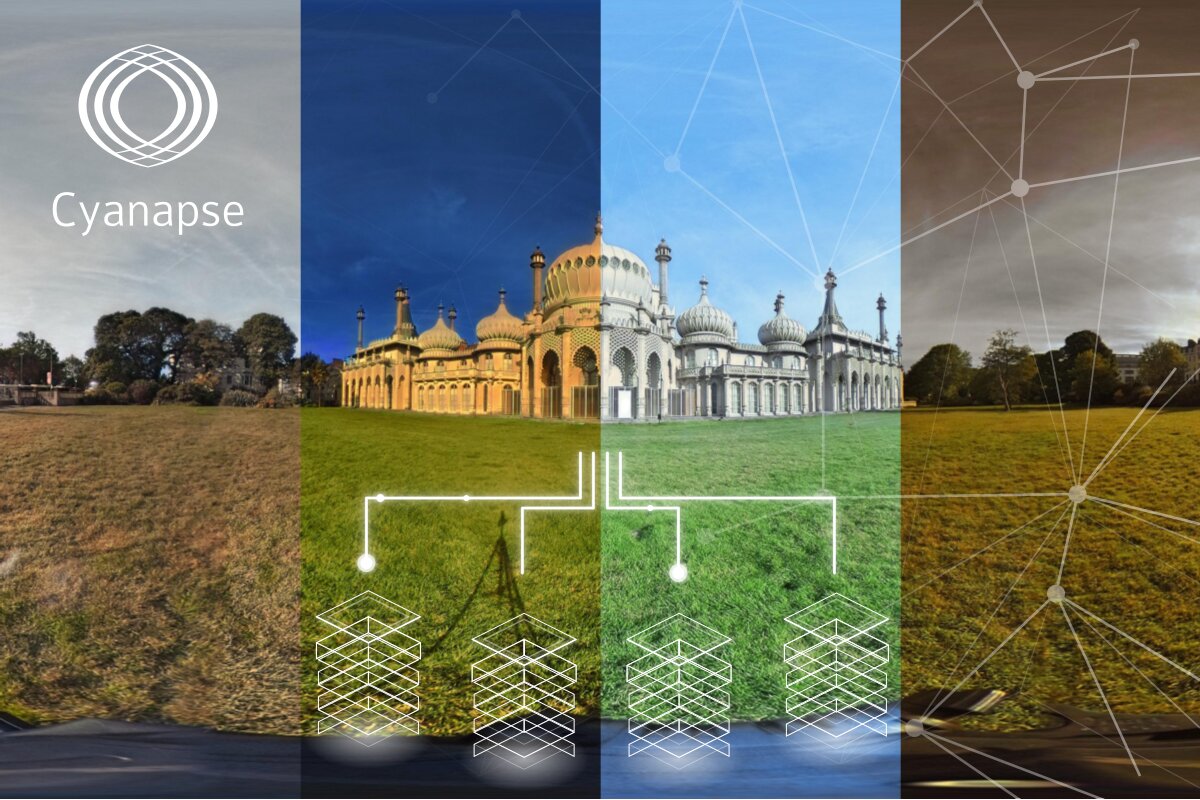
Photorealistic image editing has been a research frontier since the early days of deep learning. We presented our photorealistic filters during the early days at the Machine Intelligence Garage in 2018 and demonstrated real-time lighting transformation at the NVIDIA GTC EU Conference in Munich, achieving sub-200 ms GPU cloud delivery round-trips. Our bespoke photorealistic lighting image filters are grounded in perception quality metrics to enable automation of transformations of illumination conditions in photos, converting seamlessly daytime scenes to night-time (and vice versa), adjusting the apparent direction and quality of light, and correcting or enhancing lighting for product photography. The methodology leverages our in-house perceptual quality assessment metrics to ensure image quality, consistency, realism, and visual authenticity are preserved. These transformations adjust lights, reflections, shadows and ambient conditions in a physically plausible way, producing results that are consistently mistaken for authentic photographs.
Exact Inversion of Convolutional Neural Networks
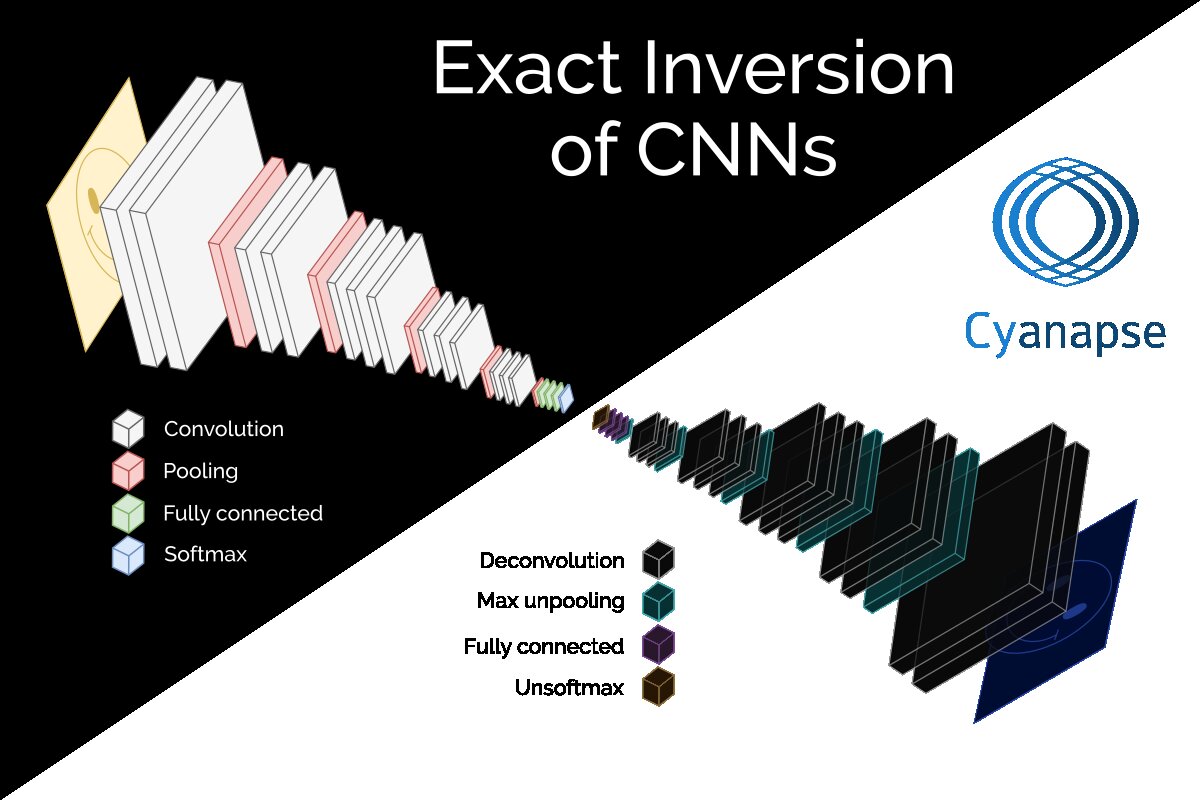
The deepest and most technically demanding component of our Vision Lab work is Exact Inversion, consisting in the development of a fully bijective convolutional neural network capable of reconstructing input images bit-for-bit from their internal representations. It enables the direct semantic manipulation of learned image representations, and accurate and continuously varying composition of enhanced visual features. The significance of Exact Inversion cannot be overstated. Without it, any perceptual augmentation embedded into a neural network's intermediate layers is irrecoverably corrupted during reconstruction. Exact inversion provides the deterministic foundation required for explainable perceptual manipulation and represents an important contribution to the emerging field of invertible AI that remains an open challenge at the forefront of AI research. Current generative AI architectures, including the latest models from major AI providers, are inherently stochastic and cannot guarantee deterministic, lossless reconstruction of a specifically altered image. Our in-house Invertible-VGG model pursues a bijective convolutional neural network that matches VGG-16 accuracy in the forward pass whilst reconstructing inputs bit-for-bit in reverse. Unlike generative diffusion models that approximate from noise, our approach derives exact mathematical inverses for each layer, addressing fundamental uncertainties around pooling, non-linear activations, and floating-point accumulation. This work is expected to result in a scientific publication and represents a meaningful contribution to the broader field of explainable and invertible AI.
Perceptual Quality Assessment Metrics
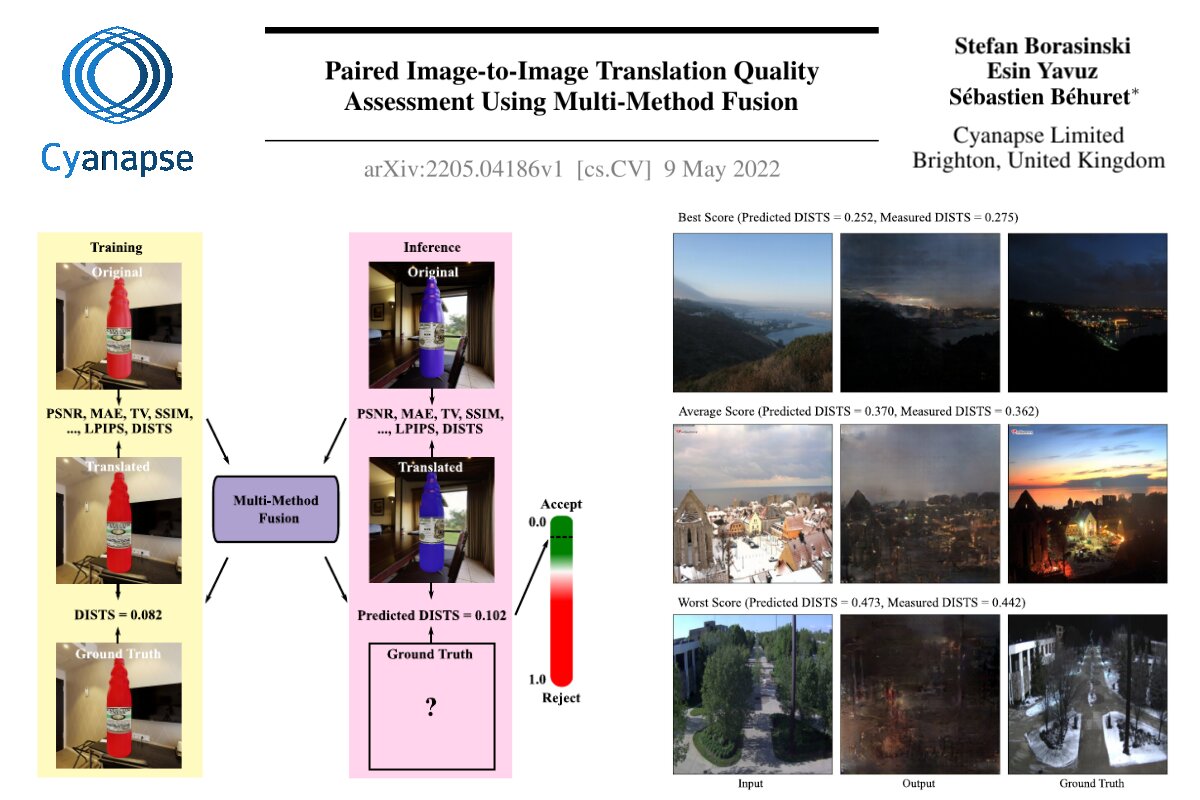
Every filter we develop is evaluated against our proprietary perceptual quality assessment metric, the subject of our cited 2022 publication in Computer Vision and Pattern Recognition, which correlates with real human assessments of image quality. The approach is based on a fusion model that combines key metrics such as SSIM, PSNR, TV ratio and others, and is used both as an optimisation objective during model training and a production quality gate during inference, ensuring that only results meeting a defined perceptual quality threshold are delivered. Perceptual Quality Assessment relies on perceptual quality score correlated with human assessment for single images, providing an absolute quality metric, which is useful for automated image selection and comparison of images, model evaluation during training and inference, and quality gating in editorial workflows.
Previous Projects
Photorealistic Image Filters
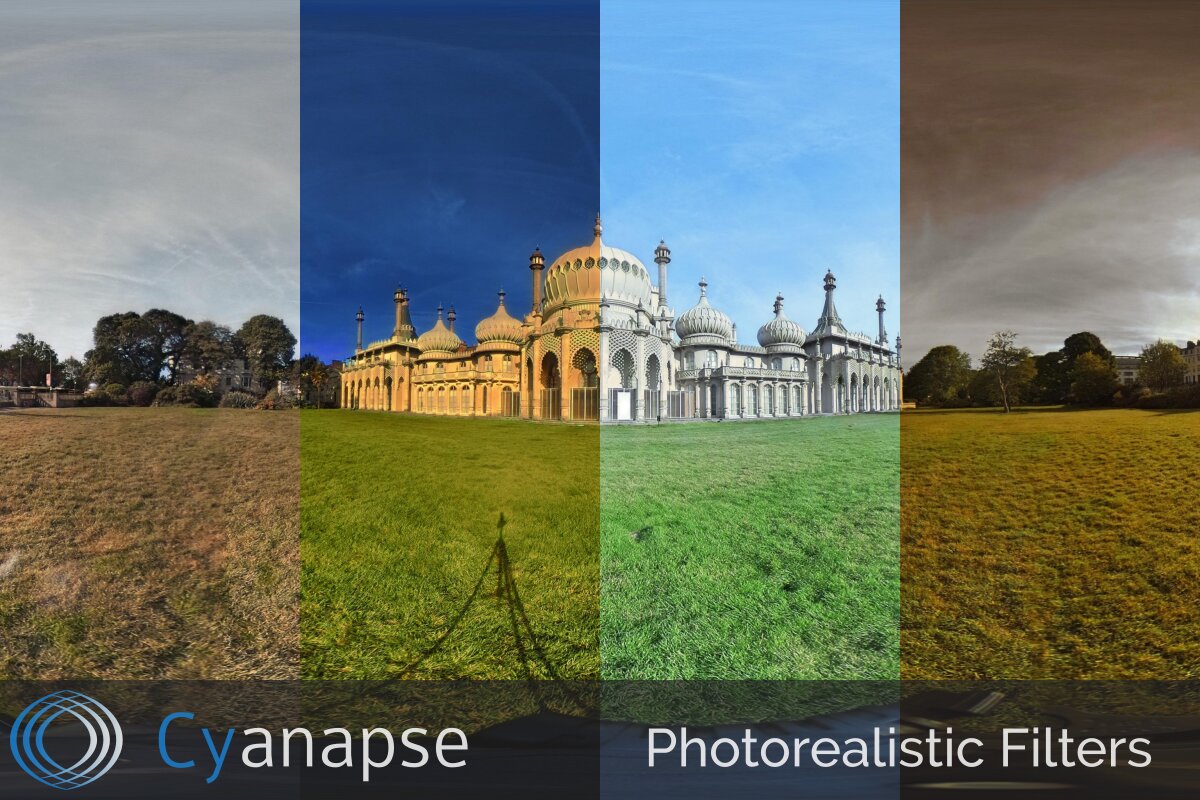
We developed the first AI-driven image filters for photorealistic lighting transformation, achieving day-to-night and night-to-day conversion, shadow and reflection adjustment, and ambient light correction. This work was presented at the NVIDIA GTC Europe conference in October 2018 and at a Digital Catapult Machine Intelligence Garage meeting in November 2018. The technology has since been refined and integrated into our current image filter and colour augmentation work.
Cylight - Vision API Concept
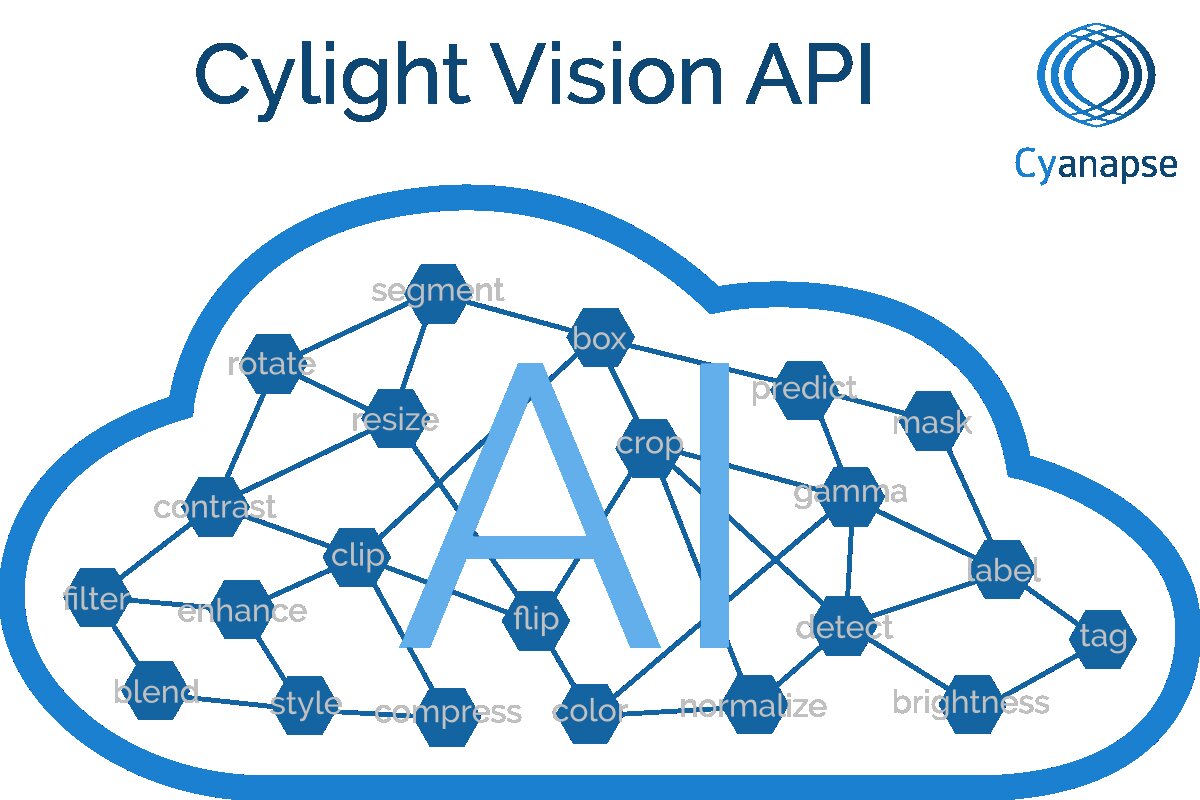
Cylight is a vision API concept designed to automate and expose our photorealistic filters, perceptual quality assessment technology, and core image transformation primitives. The development of the underlying Exact Inversion and ACE capabilities will power the production version of this service.
Celeste - Photo App Concept
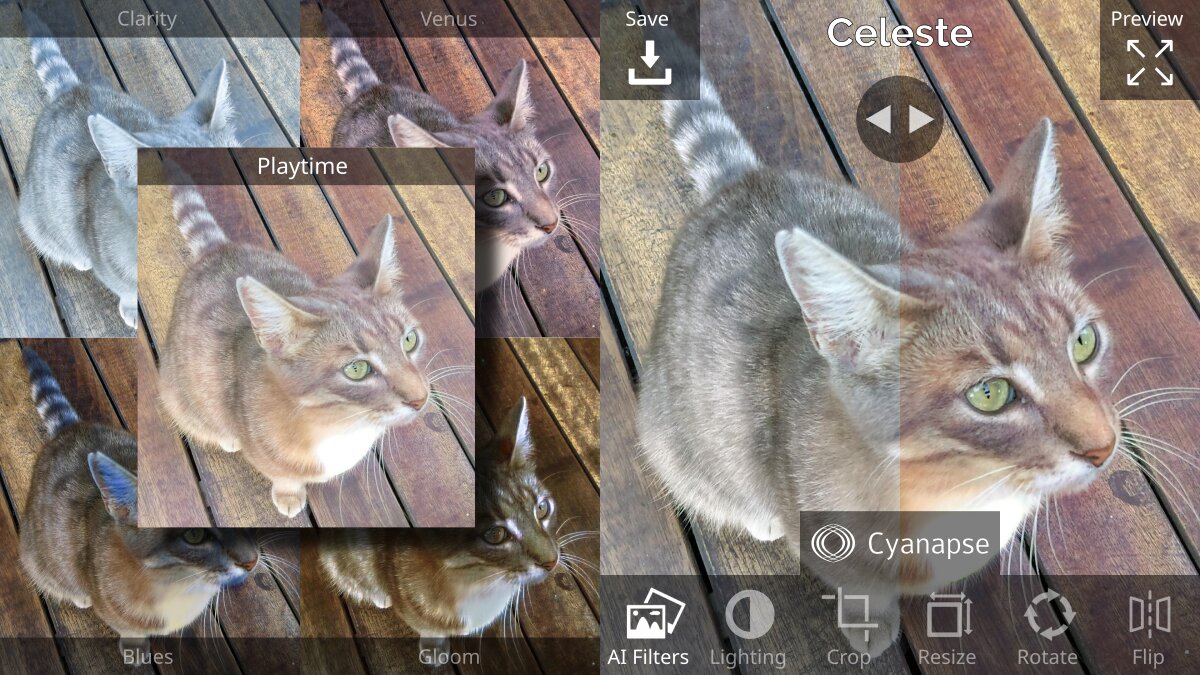
Celeste is a consumer photo application concept built on our photorealistic filter technology, aimed at photographers and creative professionals. The maturation of our core vision technology will continue to unlock advanced capabilities for the production version of this application.
Photorealistic Style Transfer - NVIDIA GTC EU 2018 Presentation
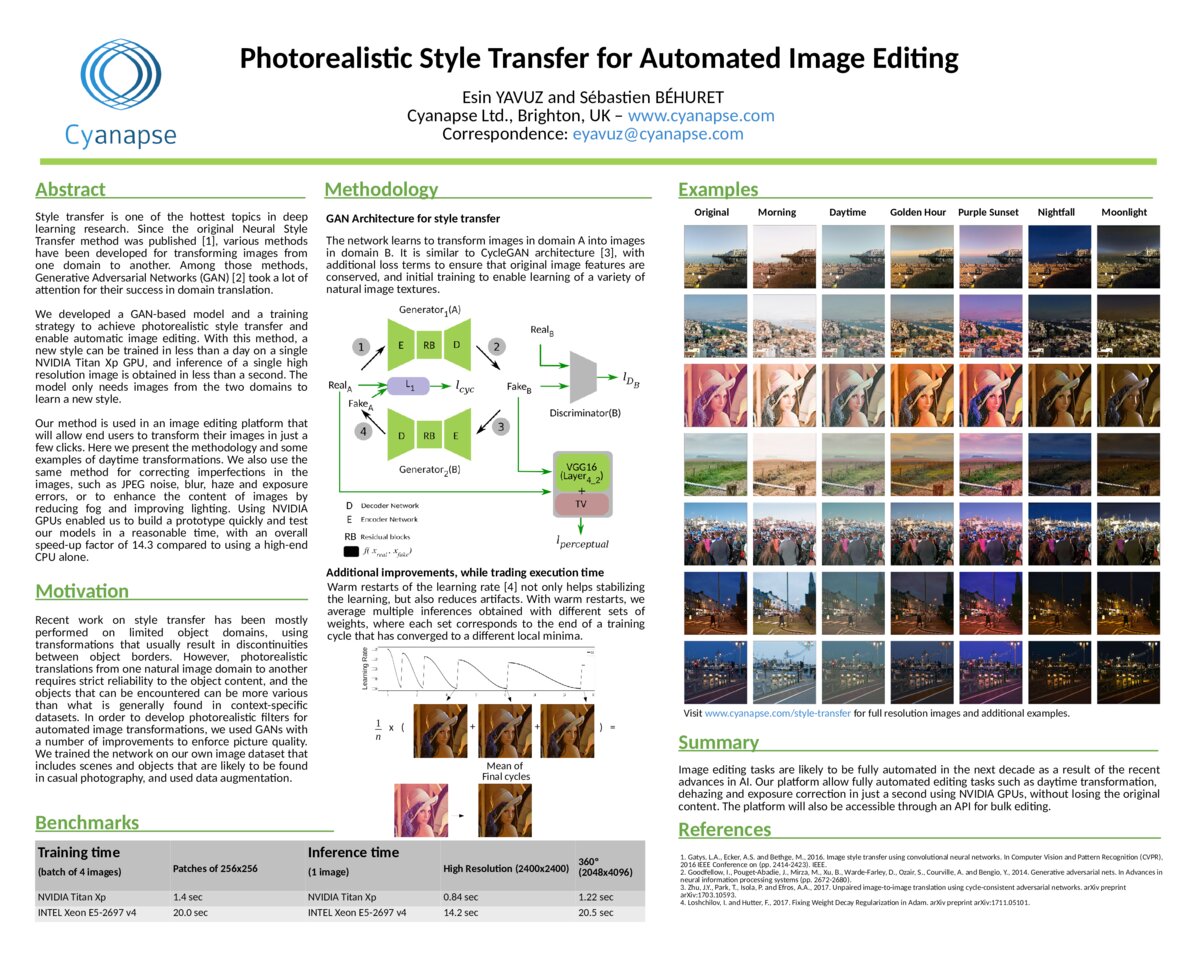
We presented early results from our style transfer research as a precursor to our photorealistic filter work at the NVIDIA GTC Europe conference in October 2018. We demonstrated neural style transfer applied to real-world image editing tasks, achieving sub-200 ms GPU cloud round-trips back when real-time AI editing was an active research frontier.
Ask a question or discuss your project
Free initial consultation
Just leave us a message using our contact form and we will schedule a call with you.